
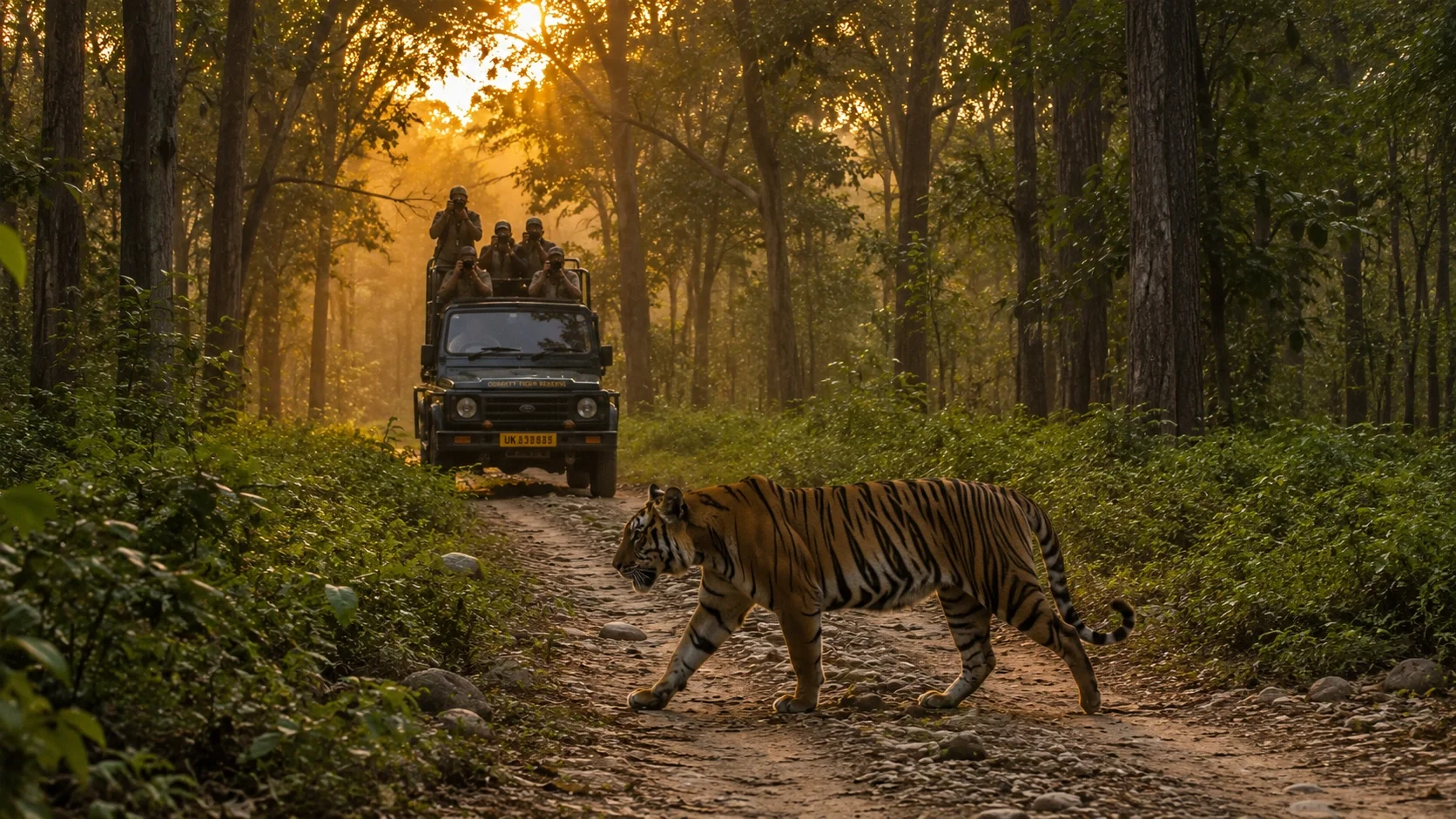
Jim Corbett National Park is one of India’s most iconic wildlife destinations and a dream place for nature lovers. Nestled in the foothills of the Himalayas in Uttarakhand, it attracts thousands of visitors every year with its rich biodiversity, scenic landscapes, and exciting jeep safaris.
However, choosing the best time to visit Jim Corbett National Park can make a huge difference to your experience. While some months offer excellent opportunities for tiger sightings, others are perfect for birdwatching, family vacations, or enjoying lush green landscapes after the monsoon.
In this guide, we’ll explore the park season by season so you can plan your trip accordingly.
👉 If you’re looking for more wildlife destinations across the country, don’t miss our guide to 15 Most Beautiful National Parks in India Every Nature Lover Should Visit.

Jim Corbett National Park Weather Throughout the Year
Jim Corbett experiences three distinct seasons—winter, summer, and monsoon. Each season offers a unique experience, depending on what you want to see and do.
| Season | Months | Experience |
|---|---|---|
| Winter | November – February | Pleasant weather, birdwatching, wildlife safaris |
| Summer | March – June | Best time for tiger sightings |
| Monsoon | July – October | Lush greenery, limited safari zones open |
Winter (November to February)

Winter is considered one of the most comfortable times to visit Jim Corbett National Park. The weather remains cool and pleasant, making jeep safaris enjoyable throughout the day.
The clear skies also provide excellent visibility for wildlife photography. During this season, migratory birds arrive from different parts of the world, making the park a paradise for birdwatchers.
Why Visit During Winter?
- Comfortable temperatures
- Great birdwatching opportunities
- Pleasant safari experience
- Ideal for families
Average Temperature: 5°C–25°C
Travel Tip: Carry a light jacket for early morning safaris, as temperatures can drop significantly before sunrise.
Summer (March to June) – Best Time for Tiger Sightings
If spotting a Bengal tiger is at the top of your bucket list, summer is widely regarded as the best time to visit Jim Corbett National Park.

As temperatures rise, animals frequently gather around rivers and waterholes, making them easier to spot during safari drives. Although afternoons can be hot, early morning and evening safaris offer excellent chances of seeing tigers, elephants, deer, and other wildlife.
Why Visit During Summer?
- Highest chances of tiger sightings
- Active wildlife around water sources
- Longer safari hours
- Excellent wildlife photography
Average Temperature: 25°C–40°C
Travel Tip: Wear light-colored cotton clothing, use sunscreen, and carry plenty of drinking water.
Monsoon (July to October)
During the monsoon, Jim Corbett transforms into a lush green paradise. Frequent rainfall rejuvenates the forests, rivers, and grasslands, creating stunning landscapes.

However, many safari zones remain closed due to heavy rains and road conditions. Fortunately, the Jhirna and Dhela zones generally remain open throughout the year, allowing visitors to enjoy wildlife experiences even during the rainy season.
Why Visit During Monsoon?
- Beautiful green landscapes
- Fewer tourists
- Peaceful atmosphere
- Budget-friendly accommodation
Average Temperature: 24°C–34°C
Travel Tip: Check the latest safari zone availability before planning your visit, as access may change depending on weather conditions.
Which Season Is Best for Different Travelers?
| Traveler Type | Best Time |
|---|---|
| Tiger Lovers | March – June |
| Birdwatchers | November – February |
| Families | November – February |
| Nature Photographers | October – March |
| Budget Travelers | July – September |
No matter when you visit, Jim Corbett offers a unique experience that changes with the seasons.
Best Safari Zones to Visit
Jim Corbett National Park has several safari zones, each offering a different landscape and wildlife experience.

Dhikala Zone
The most famous safari zone, known for tiger sightings, elephants, and vast grasslands.
Bijrani Zone
Perfect for first-time visitors looking for diverse wildlife and scenic forest landscapes.
Jhirna Zone
Open throughout the year and ideal during the monsoon season.
Dhela Zone
Known for birdwatching and regular elephant sightings.
Travel Tip: Book safari permits online well in advance, especially if you’re planning to visit the Dhikala Zone during peak season.
Nearby Attractions
If you’re spending two or three days around Jim Corbett National Park, consider exploring nearby attractions such as:
- Garjia Devi Temple
- Corbett Museum
- Kosi River
- Sitabani Forest Reserve
You can also extend your Uttarakhand itinerary by exploring some of the best sunrise points in India, many of which are located in the Himalayan region.
Final Thoughts
The best time to visit Jim Corbett National Park ultimately depends on the kind of experience you’re looking for. If wildlife sightings are your priority, especially Bengal tigers, plan your visit between March and June. On the other hand, if you prefer pleasant weather, birdwatching, and family-friendly safaris, November to February is an excellent choice.
Regardless of the season, Jim Corbett offers unforgettable encounters with nature and remains one of the finest wildlife destinations in India.
Before planning your next adventure, explore our detailed guide to 15 Most Beautiful National Parks in India Every Nature Lover Should Visit, where you’ll discover more incredible wildlife destinations across the country.
Do check out our latest post on Facebook & Instagram. And do subscribe to stay connected with us. Happy Travelling!